IRGC Abandons Proportional Retaliation, Threatens US Tech Giants as Iran Enters New War Phase
 AI Generated
Iran has shifted from tit-for-tat retaliation to open-ended escalation following March 27 US-Israeli strikes on its nuclear and industrial infrastructure. The IRGC Aerospace Force commander's declaration that "this time, the equation will no longer be an eye for an eye" — coupled with formal identification of US technology firms as targets — marks the most significant doctrinal escalation of the conflict. Supreme Leader Mojtaba Khamenei, installed by the IRGC and still publicly unseen since taking office, has consolidated hardline control while pragmatist President Pezeshkian operates at the political margins.
I. Operation True Promise 4 — Wave 84: Systematic Targeting of US Aerial Logistics
IRGC Announces Aerospace Strike on Saudi Refueling Base REPORTED
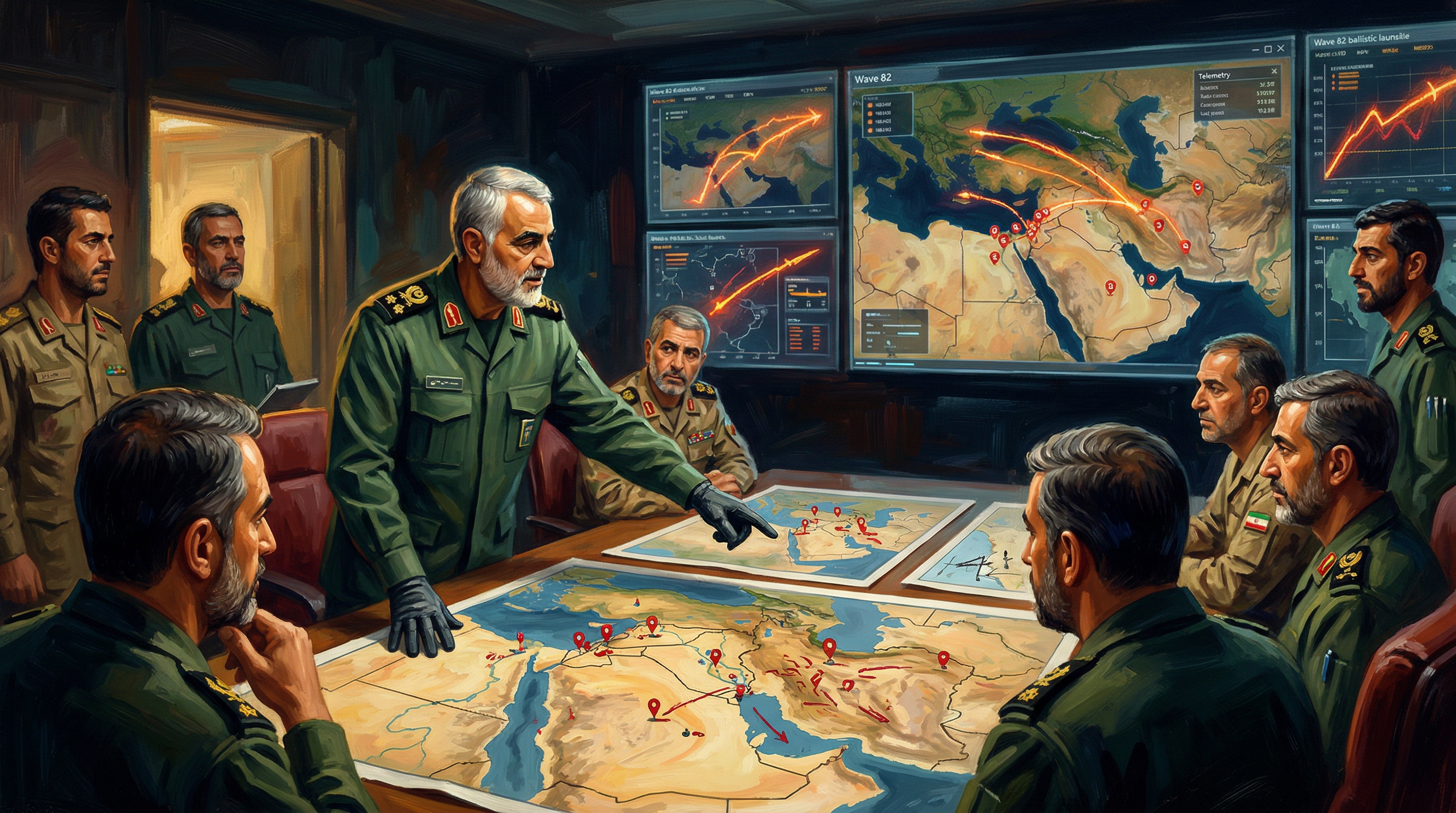
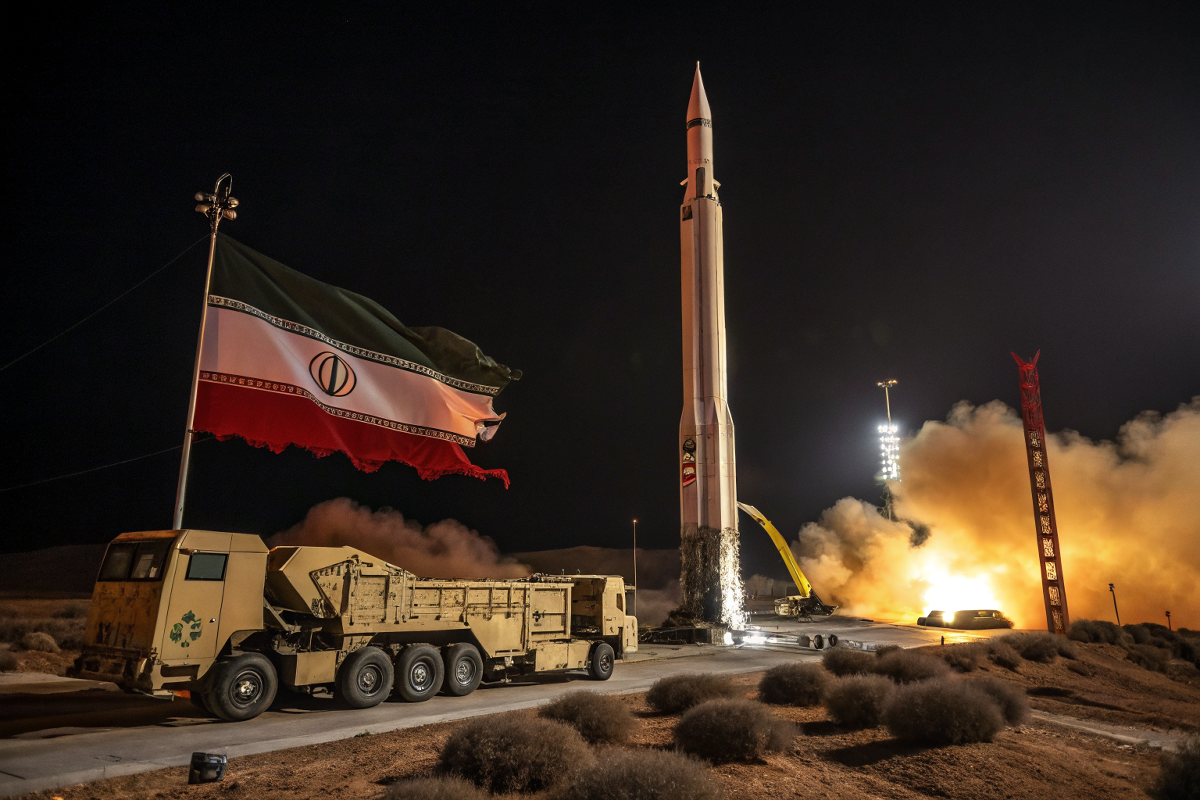
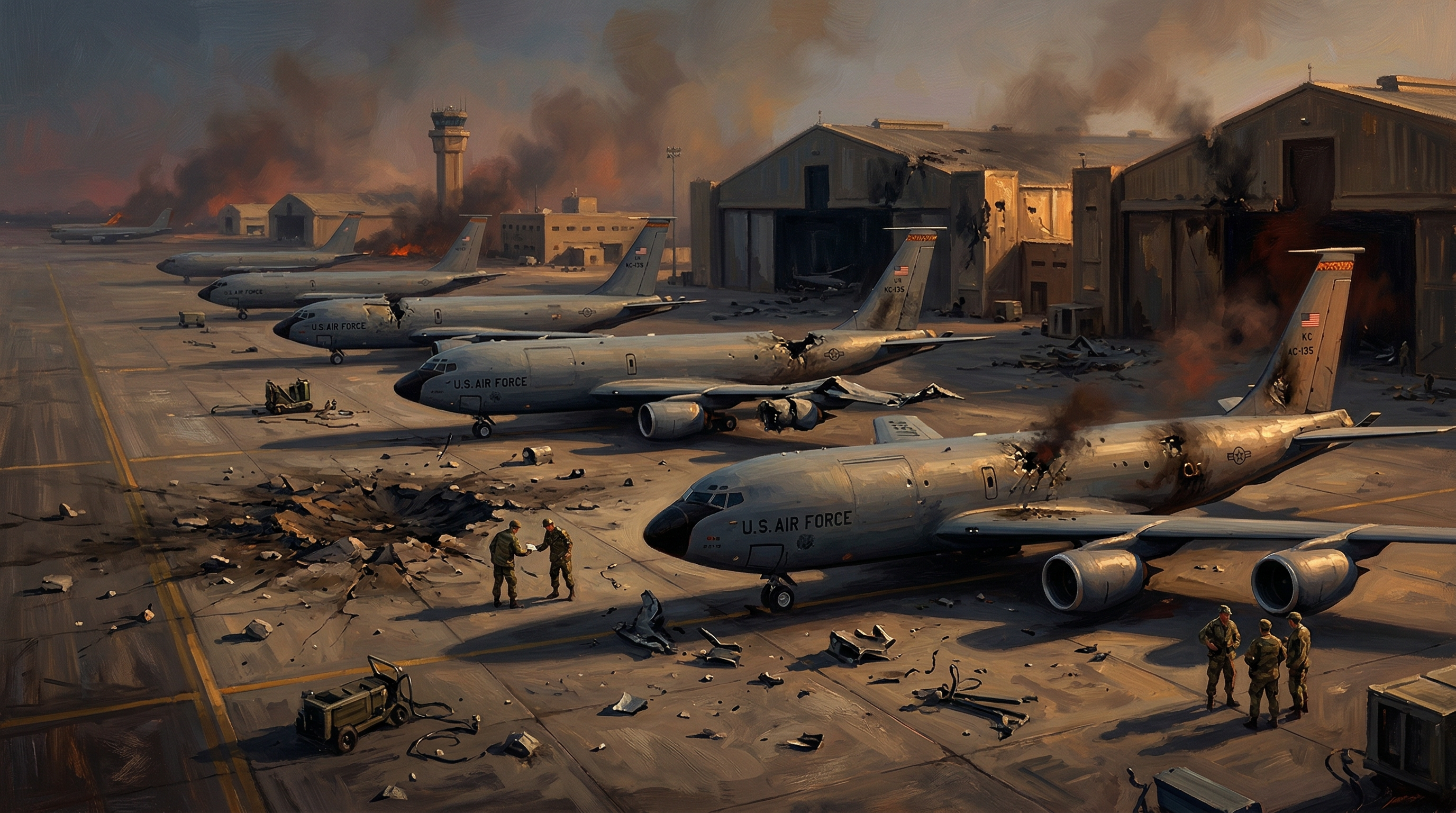
The IRGC launched Wave 84 of Operation True Promise 4 on March 27, targeting KC-135 Stratotanker refueling aircraft at Prince Sultan Air Base (Al-Kharj) in Saudi Arabia. The IRGC claims air defenses at the base were neutralized before sequential strikes on logistical infrastructure using solid- and liquid-fueled ballistic missiles and attack drones.
Military Times independently confirmed that a March 13 Iranian strike damaged five KC-135 Stratotankers at the same base, with satellite imagery appearing to corroborate further destruction on March 27. [ASSESSED: The systematic targeting of refueling infrastructure represents a coherent asymmetric strategy to degrade US air campaign sustainability, exploiting the visibility of large parked tanker aircraft.]
Campaign Scope TRUE
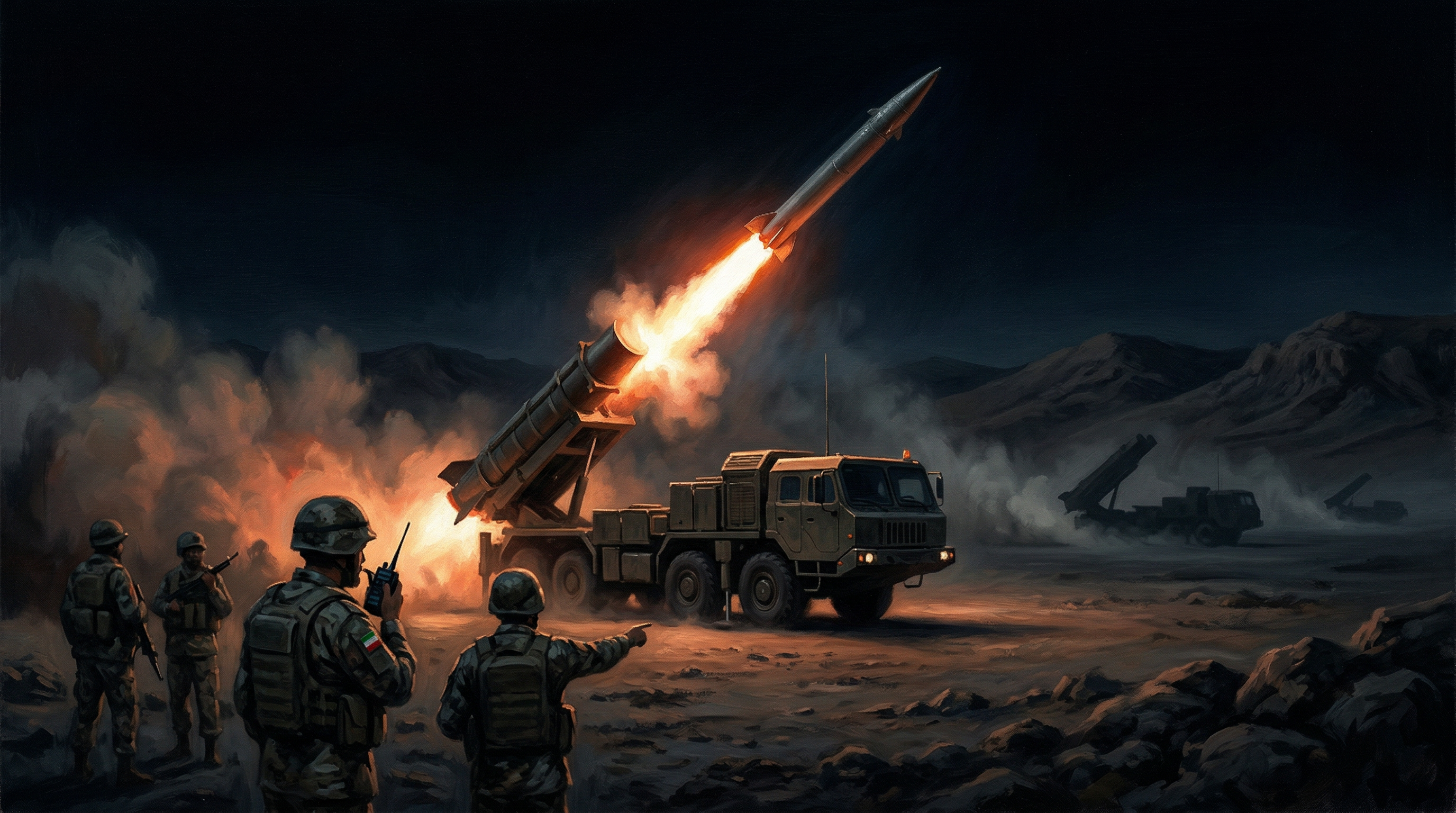
Operation True Promise 4, launched February 28 in retaliation for US-Israeli strikes, has now completed 84 documented waves targeting Tel Aviv, Haifa, Be'er Sheva, Jerusalem, and US bases across Qatar, UAE, Bahrain, Kuwait, Jordan, Saudi Arabia, and Iraq. Weapons include Kheibar Shekan, Emad, and Sejjil ballistic missiles, hypersonic and cruise missiles, and attack drones. PressTV operational summaries document the breadth.
Iranian Army Strike on Tel Aviv REPORTED
IRNA reported the Islamic Republic of Iran Army announced a strike on an "Israeli military support base and transportation center in Tel Aviv." Independent confirmation is pending.
 AI Generated
II. The Escalation Threshold: IRGC Warfare Commander Signals "Beyond Eye for an Eye"
Explicit Abandonment of Proportional Doctrine ATTRIBUTED
Brig. Gen. Seyyed Majid Mousavi, Commander of the IRGC Aerospace Force, issued a direct escalation warning following the March 27 Israeli strikes on Iranian nuclear and industrial sites. As reported by PressTV:
"You played with fire when attacking Iran's infrastructure. This time it will not be an eye for an eye."
The statement included an evacuation advisory to workers at "US and Israeli-linked industrial companies" and formalized a target list of major US technology corporations: Google, Microsoft, Palantir, IBM, Nvidia, and Oracle. [ASSESSED: The IRGC's explicit rejection of proportional "eye for an eye" rhetoric and naming of US tech corporations as targets represents the most significant escalation signal since the conflict began. This posture serves dual purposes: domestically, it channels public anger into forward-looking retaliation; externally, it functions as deterrence signaling to US corporate and government stakeholders.]
Strait of Hormuz Blockade Warning REPORTED
The IRGC declared that any movement in the Strait of Hormuz for "US-Israeli supporters" is forbidden and urged civilians in regional states hosting US forces to evacuate. Iran has maintained selective passage through the Strait favoring Chinese-flagged vessels since March 2, with Trump's ultimatum extended to April 6, 2026.
III. Nuclear and Industrial Infrastructure Under Attack
March 27 Nuclear Strikes Confirmed TRUE
Israel struck two nuclear-related facilities confirmed by Iran's Atomic Energy Organization and international sources:
-
Khondab Heavy Water Research Reactor (Arak Complex, Markazi Province) — The Aviationist and @sentdefender confirmed the IDF description of this as "a key plutonium production site for the IRGC's nuclear weapons program."
-
Ardakan Uranium Processing Facility (Yazd Province) — Iran confirmed the strike on what Israel described as "the only one of its kind in Iran" where raw uranium ore is processed into yellowcake at approximately 50 tons/year capacity. The IDF statement characterized this as degrading Iran's enrichment supply chain.
Iran's Atomic Energy Organization stated no radioactive release occurred and reported no casualties. [MIXTURE: Iranian denial of radiation release aligns with Western reporting, but the strategic damage to Iran's nuclear infrastructure supply chain is independently assessed as significant.]
Steel Industry — IRGC-Linked Assets Destroyed TRUE
US-Israeli strikes on March 27 targeted two of Iran's largest steel producers, both with partial IRGC ownership:
-
Mobarakeh Steel Company (Isfahan) — The largest steel company in the Middle East/North Africa region, accounting for approximately 1% of Iranian GDP and more than 50% of national steel output. Times of Israel confirmed IRGC partial ownership.
-
Khuzestan Steel Company (Ahvaz region) — Confirmed struck; @Osint613 reported the Baqerka facility in Isfahan was also hit.
FM Araghchi stated: "Israel has hit 2 of Iran's largest steel factories, a power plant and civilian nuclear sites among other infrastructure." @PressTV reported "at least 14 women and children among 26 killed in US-Israeli strikes on residential areas in Isfahan."
Air Defense Engagement REPORTED
@PressTV reported Iranian air defenses shot down a US cruise missile over northwestern Iran on March 27. @Osint613 reported blasts in Tehran as recently as 19:01 UTC and at Sadrshimi Industries (a chemical subsidiary of Iran's Defense Ministry) in Shiraz at 19:04 UTC.
 AI Generated
IV. The New Supreme Leader: IRGC-Installed, Publicly Absent, Hardline-Aligned
Mojtaba Khamenei Consolidates Power Without Public Appearance TRUE
Following Supreme Leader Ali Khamenei's assassination on February 28, 2026, the Assembly of Experts elected Mojtaba Khamenei, 56, as Iran's third Supreme Leader on March 8–9, 2026. Critical aspects of his tenure:
-
Iran International and NBC News reported the IRGC applied "repeated contacts and psychological and political pressure" on Assembly members to secure his election.
-
Mojtaba lacks the formal religious credentials (Grand Ayatollah rank) of his predecessor; his father had previously stated he should be "excluded from consideration."
-
He has not appeared publicly since taking office; his March 12 inaugural statement was read on-air by a PressTV anchor, not delivered directly. Al Jazeera reported his first statement called for national unity, vowed Hormuz closure would continue, demanded closure of all US regional bases, and pledged revenge for all Iranian casualties.
[ASSESSED: Mojtaba Khamenei's public invisibility is both a security measure and a political liability. His IRGC-installed authority substitutes organizational loyalty for popular legitimacy, making the Islamic Republic more of a military-theocratic hybrid than at any point since 1979. Effective decision-making authority rests with the IRGC chain of command rather than the clerical establishment.]
V. Regime Diplomatic Posture and Ceasefire Rejection
Iran Formally Rejected US 15-Point Ceasefire Plan TRUE
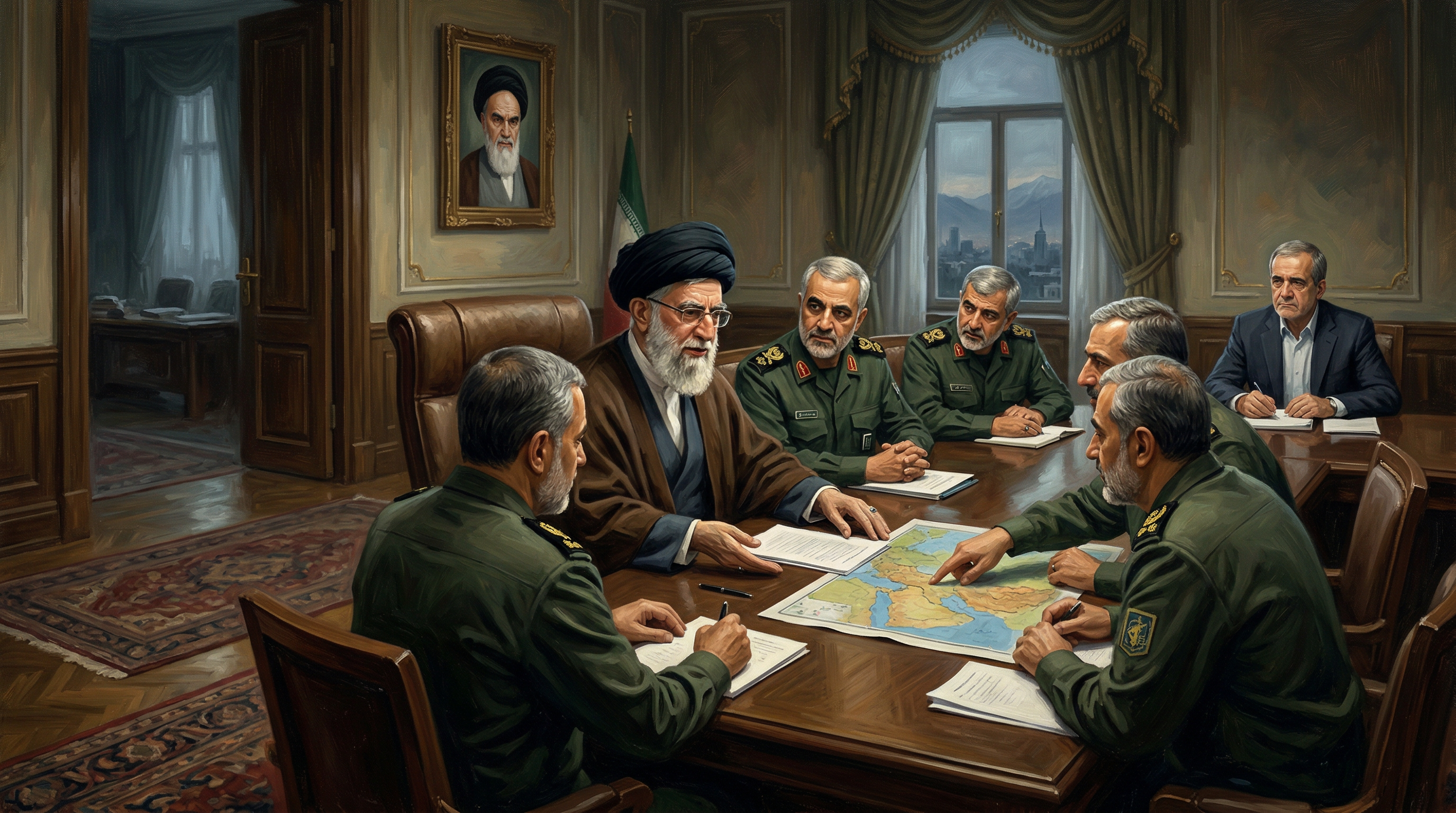
Iran rejected the US 15-point peace plan (conveyed via Pakistan) on March 25, describing it as "extremely maximalist and unreasonable." Iran submitted a 5-point counter-proposal with non-negotiable terms: (1) halt assassinations of Iranian officials, (2) security guarantees against future war, (3) war reparations, (4) end hostilities on all fronts including Hezbollah, (5) Iranian sovereignty over the Strait of Hormuz. Iran International reported Tehran had not yet formally responded to a subsequent US proposal as of March 27.
Foreign Minister Threatens "Heavy Price" ATTRIBUTED
PressTV reported FM Seyyed Abbas Araghchi declared Iran will "exact heavy price for Israeli crimes." He separately framed the Israeli strikes as violating Trump's extended deadline for diplomacy, attempting to drive a wedge between Washington and Tel Aviv. At the UN Human Rights Council emergency session, Araghchi characterized the Minab school attack as "deliberate and intentional" and "the tip of a far larger iceberg."
Parliament and Supreme Leader's Circle Reject Coercion REPORTED
Farsi News Agency reported Iran's Parliament Speaker dismissed the US ultimatum, consistent with hardliner consensus that military coercion will not produce Iranian capitulation on core sovereignty issues. The Supreme Leader's aide warned any attack on Iran would "boomerang" on participants.
 AI Generated
VI. Humanitarian Toll and UN Response
Confirmed Casualties and Damage MIXTURE
- Iranian Red Crescent: 1,900+ killed, 20,000+ wounded since February 28 REPORTED
- HRANA (NGO, March 17): 1,354 civilian deaths including 217 children; 1,138 military; 622 unclassified REPORTED
- 114 historical sites damaged; Baba Taher mausoleum in Hamadan blast-damaged REPORTED
- EMS: 1 air ambulance, 35 ambulances destroyed; 49 EMS bases hit; 6 EMS personnel killed REPORTED
- 600+ schools destroyed or severely damaged; 289 medical centers struck REPORTED
Minab School Massacre Triggers UN Emergency Session TRUE
The UN Human Rights Council convened an emergency session on March 27 following the Shajareh Tayyebeh Girls' Primary School attack in Minab on February 28, in which 165–170 schoolgirls aged 7–12 were killed. UN Special Rapporteur Farida Shaheed stated precision munitions "struck each building individually," suggesting deliberate targeting or severe intelligence failure. Iran's FM Araghchi called it "deliberate and intentional" at the emergency session. The HRC condemned the attack and called for independent investigation.
VII. Proxy Network Status and Escalatory Reserve
Houthis: Ready for Entry, "Important Statement" Pending ASSESSED
The Houthi-armed forces spokesperson announced an "important statement" was forthcoming as of March 27 evening UTC but had not yet published as of report time. Background indicates readiness:
- Houthi leader Abdul-Malik al-Houthi: "fingers on the trigger, ready to respond at any moment" (March 20).
- Senior Houthi official Mohammed al-Bukhaiti told Reuters participation is "a matter of time" (March 26).
[ASSESSED: Iran appears to be holding Houthi Bab al-Mandab activation as a reserved escalatory lever — to be deployed if the war expands further or as a strategic surprise. The pending statement may mark formal Houthi entry into the conflict.]
Iraqi Militias: Operationally Active TRUE
The National identified Kataib Hezbollah, Al Nujaba Movement, Kataib Sayied Al Shuhda, and Asaib Ahl Al Haq as active Iranian proxy forces coordinated by Quds Force. Quds Force chief Qaani issued public praise for "the anti-US, Israel front" in his first wartime statement (March 20). Iraqi militia strikes against US bases have been integrated into Operation True Promise 4.
Hezbollah: Degraded but Engaged, IRGC Personnel Embedded REPORTED
The March 26 Israeli assassination of IRGC Navy Commander Alireza Tangsiri in Lebanon signals continued Israeli targeting of IRGC personnel deployed with Lebanese Hezbollah. The regime has resurfaced archival Khamenei messaging stating "Hezbollah is alive and thriving" as posthumous narrative management.
Internal Security: Mossad Cell Disrupted, Starlink Terminals Seized REPORTED
PressTV (March 27) reported the IRGC Intelligence dismantled a 3-member Mossad-linked cell in Kermanshah, seizing explosive devices, a handgun, and 3 Starlink satellite terminals. Iran's Intelligence Ministry separately reported 14 US/Israeli-recruited agents detained across four provinces. [ASSESSED: The Starlink seizures are operationally significant — they indicate Israeli intelligence is establishing independent communications infrastructure inside Iran for sabotage and strike coordination operations.]
VIII. Regime Internal Dynamics: IRGC Dominance, Pragmatist Marginalization
Pezeshkian's Functional Role in the Hardline State