Pahlavi Escalates Bid for Iran Leadership as Opposition Splinters Into Three Rival Camps
 AI Generated
Reza Pahlavi is executing an intensive phase of opposition leadership consolidation, speaking at CPAC Dallas on March 28 and rallying diaspora support in Washington D.C. on March 29, while defending his newly formed Transitional Justice Committee against internal factional attacks. However, the Iranian opposition landscape remains fractured among three competing structures—Pahlavi's Iran Prosperity Project, the NCRI's rival provisional government, and the nascent Congress of Freedom Iran—with no confirmed mass IRGC defections materializing inside the country to date.
Pahlavi's Diplomatic Campaign and Public Positioning (March 2026)
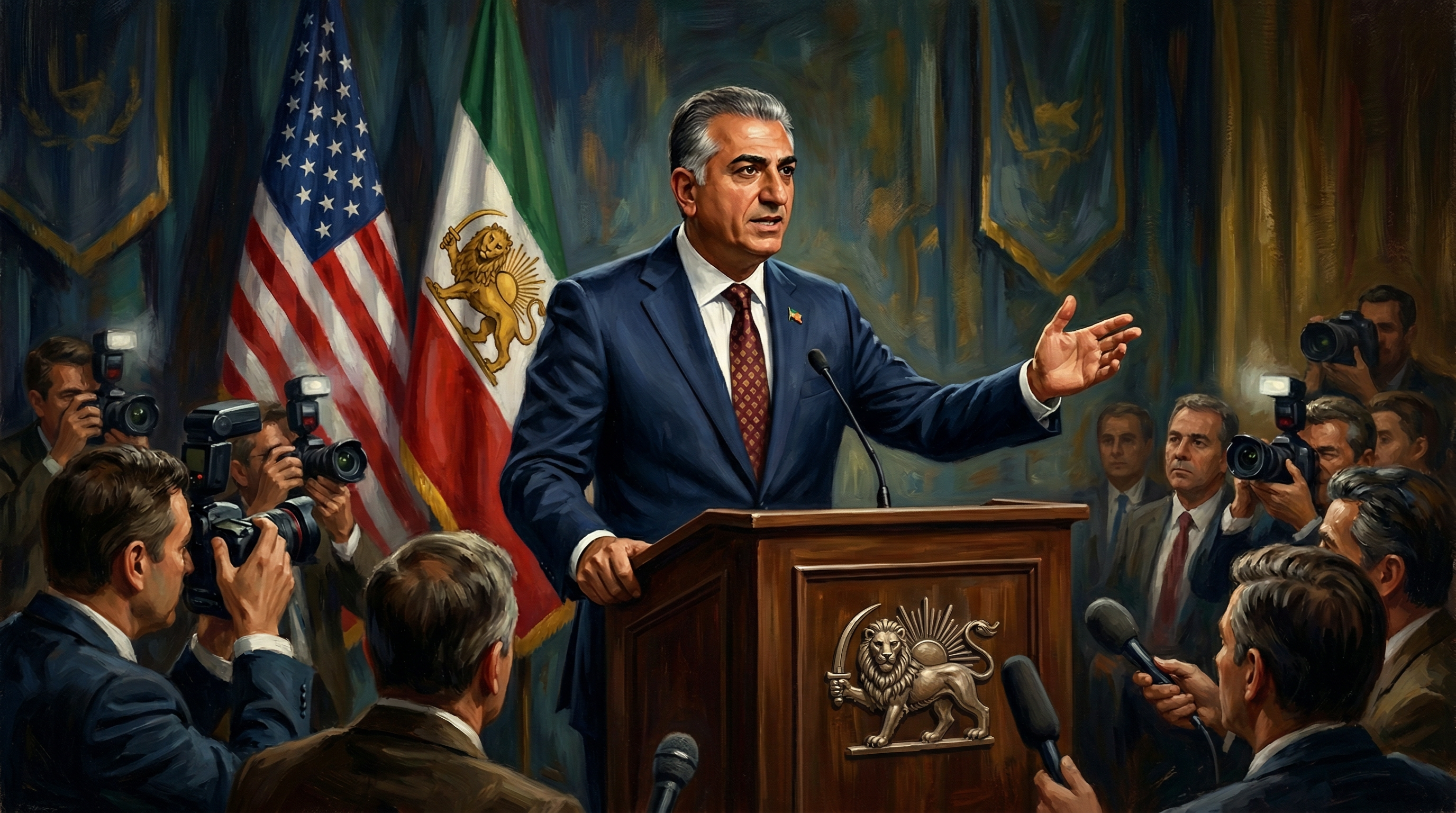
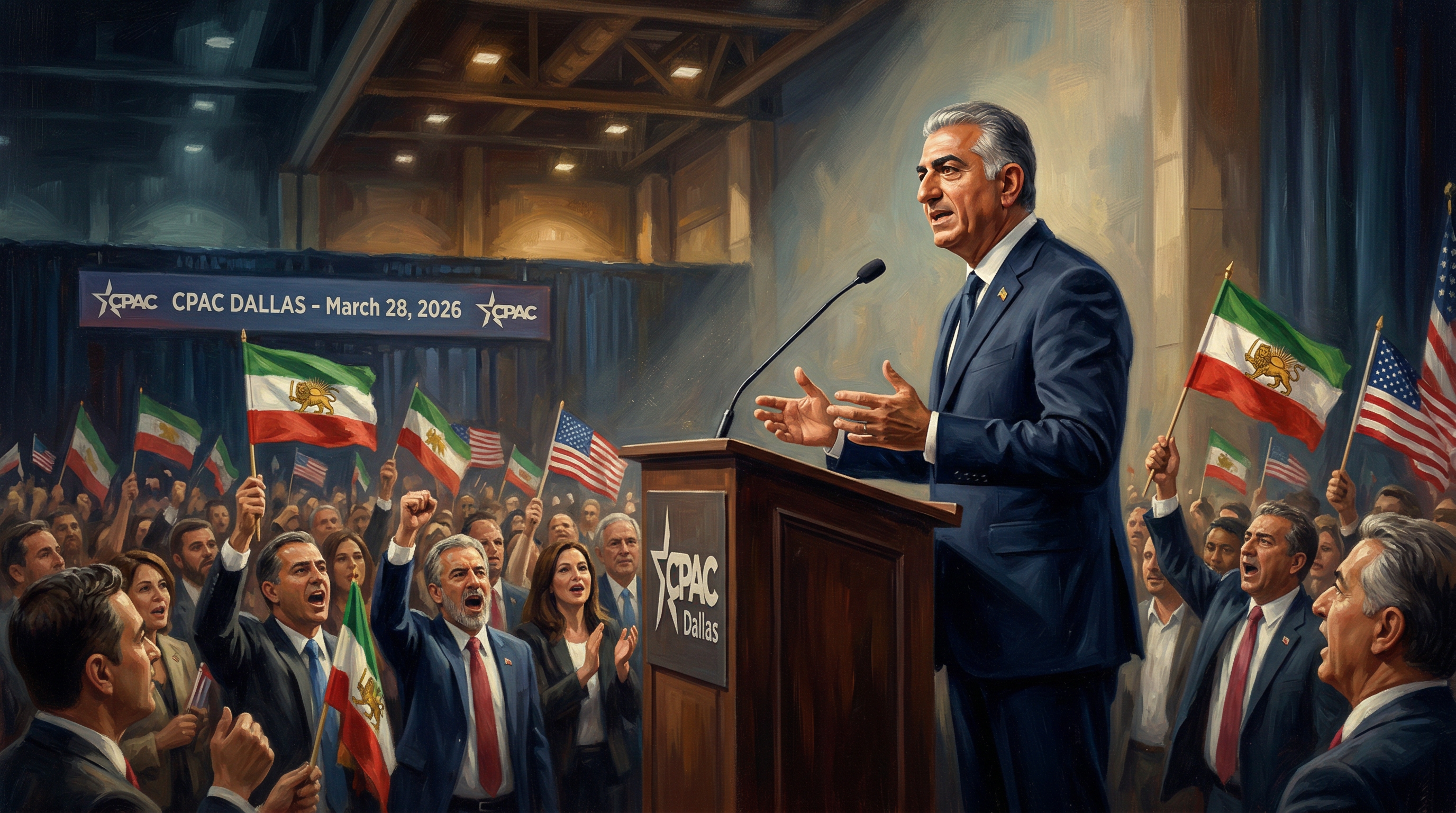
Pahlavi has intensified his visibility and political claims across Western platforms in recent weeks. He appeared at CPAC USA 2026 in Grapevine, Texas (March 25–28), TRUE confirmed by CPAC itself and covered by CNN and The Hill. His personal account confirmed his presence on March 28: "Today at the CPAC summit in Dallas, Texas, and tomorrow Sunday (March 29) in Washington D.C., we will be the voice of our brave and fighting compatriots in Iran." ATTRIBUTED
At CPAC, Pahlavi pitched himself as interim leader following Khamenei's death, stating he would serve "a couple of years, at most" until democratic elections could be held, and deployed the slogan "MIGA — Make Iran Great Again." ATTRIBUTED(https://www.yahoo.com/news/articles/hundreds-iranian-war-demonstrators-rallied-192623458.html)] This deliberate alignment with Trump administration rhetoric is ASSESSED calculated to maximize Republican political support for recognition of the opposition.
The Iranian monarchist presence was visually prominent—Lion and Sun flags reportedly rivaled Stars and Stripes in the venue, with chants of "King Reza Pahlavi" and "Regime Change for Iran" echoing through the halls. REPORTED(https://www.cnn.com/2026/03/27/politics/cpac-iran-war-israel-divides)] However, media coverage also documented at least one Iranian woman at CPAC who publicly stated she does not support Pahlavi as leader. REPORTED(https://derrickbroze.substack.com/p/iranian-woman-does-not-support-crown)]
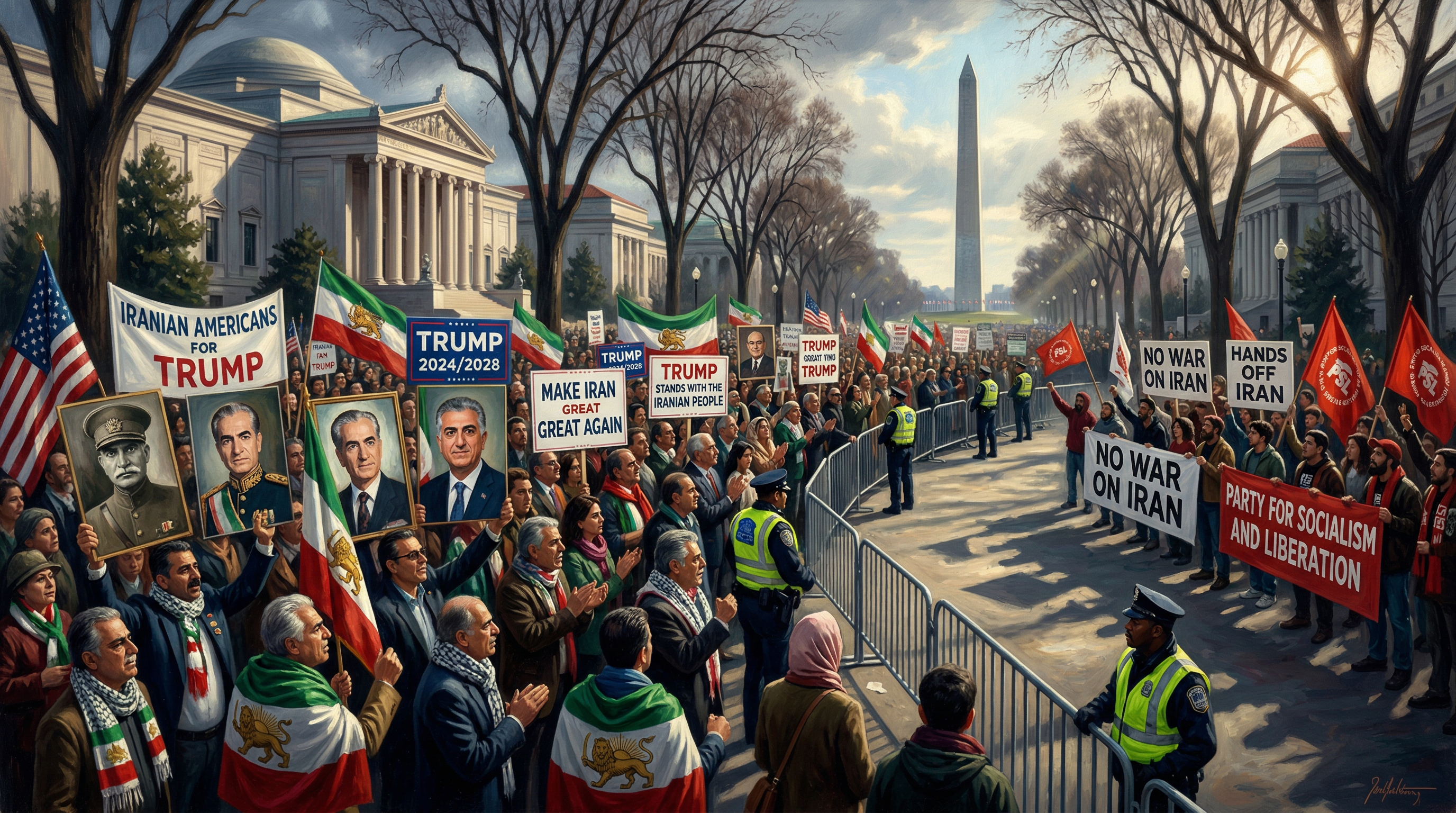
A large pro-Pahlavi rally is scheduled for Sunday, March 29 at 1:00 PM on the National Mall (between 3rd and 4th Streets) in Washington D.C. TRUE — independently confirmed by @PahlaviComms, WUSA9, and WTOP. Attendees are expected to carry pro-Trump signage and Pahlavi portraits; anti-war counter-protesters from the Party for Socialism and Liberation are also anticipated.
Core Messaging Strategy
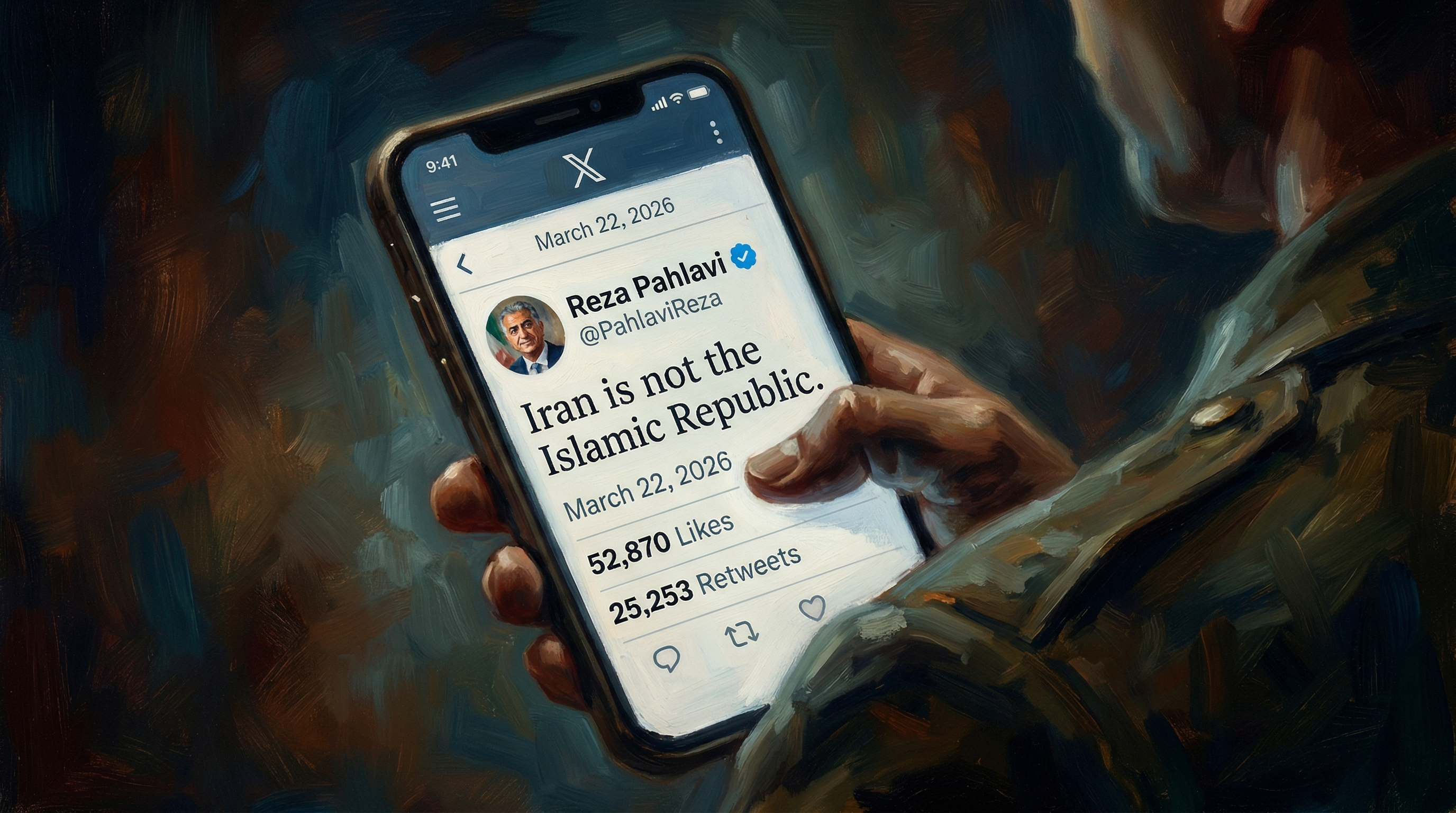
On March 22, Pahlavi released his most viral statement to date (52,870 likes, 25,253 retweets): "Iran is not the Islamic Republic. Iran's civilian infrastructure belongs to the Iranian people... Iran must be [protected]; the Islamic Republic must be [eradicated]." ATTRIBUTED This framing provides explicit political cover for U.S.-Israeli military strikes on regime assets while protecting civilian infrastructure from the frame of war.
On March 23, he reinforced alignment with the Trump administration: "President Trump is right. This regime only understands strength... When Iran is free, the world will have lasting peace." ATTRIBUTED
 AI Generated
The Transitional Justice Committee and Internal Opposition Backlash
Formation and Membership
Pahlavi announced the Committee for Drafting Transitional Justice Regulations on March 16, 2026. TRUE — confirmed by Iran International, Israel National News, and The Times of Nigeria.
The committee is chaired by Shirin Ebadi, the Nobel Peace Prize laureate and Iran's first female judge before the 1979 revolution. Other members include human rights activist Iraj Mesdaghi, legal scholar Afshin Ellian, and international arbitration lawyer Leyla Bahmani. TRUE(https://kayhanlife.com/authors/reza-pahlavi-shirin-ebadi-plan-transitional-justice-system-for-iran/)]
The committee's mandate is to draft rules for a truth-finding commission and transitional court covering human rights abuses since 1979.
Attacks and Defense
Pahlavi's most engaged tweet today (14,954 likes, 5,409 retweets as of 14:13 UTC on March 28): "In recent days, Shirin Ebadi and other members of the Committee for Drafting Transitional Justice Regulations have been subjected to vile and malicious insults and attacks." He defended the committee members and framed their work as a "national duty." ATTRIBUTED
The attacks appear to originate from ASSESSED within the opposition and diaspora ecosystem itself—likely from factional critics opposed to either Ebadi's high profile or the committee's legitimacy structure. The regime appears to lack the operational capacity to execute this type of coordinated disinformation campaign within diaspora social networks at this scale.
The Iran Prosperity Project: Transition Blueprint and Criticism
The Iran Prosperity Project, launched April 30, 2025 in Washington D.C., is Pahlavi's operational transition framework developed under the National Union for Democracy in Iran (NUFDI). TRUE
The framework consists of three operational phases:
- Emergency Phase (first 180 days): Covers 14 policy areas including security sector reform, macroeconomic stabilization, energy policy, and judiciary restructuring
- Three-branch transitional government: Transitional Mehestan (legislature), Transitional Government (executive), and Transitional Divan (judiciary)
- Pahlavi's authority: Designated as "Leader of the National Uprising" with coordination powers across all three branches during the transition period
- Democratic endpoint: A national referendum on monarchy versus republic, followed by constituent assembly elections within six months
Pahlavi has characterized himself as "a bridge, rather than the destination." ATTRIBUTED(https://openthemagazine.com/world/explained-what-reza-pahlavis-transitional-system-plan-means-for-iran-amid-escalating-war)]
However, the NCRI, Radio Zamaneh, and some Western analysts describe the IPP as concentrating excessive executive power in Pahlavi's hands during the critical transition period. REPORTED(https://www.ncr-iran.org/en/fake-opposition/behind-reza-pahlavis-plan-for-iran-authoritarian-rule/), Radio Zamaneh] The Jerusalem Post offers a more balanced assessment, noting the IPP is the only comprehensive post-regime blueprint currently operational.
 AI Generated
The NCRI's Rival Provisional Government
The National Council of Resistance of Iran (NCRI), led by Maryam Rajavi, declared its own Provisional Government on February 28, 2026, timed to Khamenei's death. REPORTED(https://middle-east-online.com/en/new-chapter-iran%E2%80%99s-tumultuous-struggle-ncri-announces-provisional-government)]
The NCRI's declaration includes:
- A six-month interim period culminating in free elections for a constituent assembly
- A ten-point democratic platform: universal suffrage, gender equality, abolition of clerical rule, and separation of church and state
- International rallies: Brussels (March 19), Gothenburg (March 1), and Stockholm (March 3) calling for EU recognition TRUE(https://www.ncr-iran.org/en/news/iran-resistance/iranian-opposition-supporters-stage-major-rally-in-brussels-calling-on-eu-to-recognize-ncri-provisional-government/)]
- Parliamentary endorsement: Baroness Nuala O'Loan explicitly endorsed the NCRI's interim government at a March 4 event REPORTED(https://www.ncr-iran.org/en/news/iran-resistance/uk-mps-and-legal-experts-endorse-ncris-provisional-government-and-ten-point-plan-for-future-iran/)]
The NCRI simultaneously issued public criticism of Pahlavi's IPP as "authoritarian rule." ATTRIBUTED(https://www.ncr-iran.org/en/fake-opposition/behind-reza-pahlavis-plan-for-iran-authoritarian-rule/)]
[ASSESSED: The NCRI/MEK declaration of a provisional government represents a direct challenge to Pahlavi's leadership claims, though the NCRI's lack of broad-based legitimacy within Iran and the persistent controversy surrounding the MEK/PMOI organization limit its political utility. However, it does constitute an operational parallel structure with established physical presence in France and Albania.]
Congress of Freedom Iran: The Emerging Third Coalition
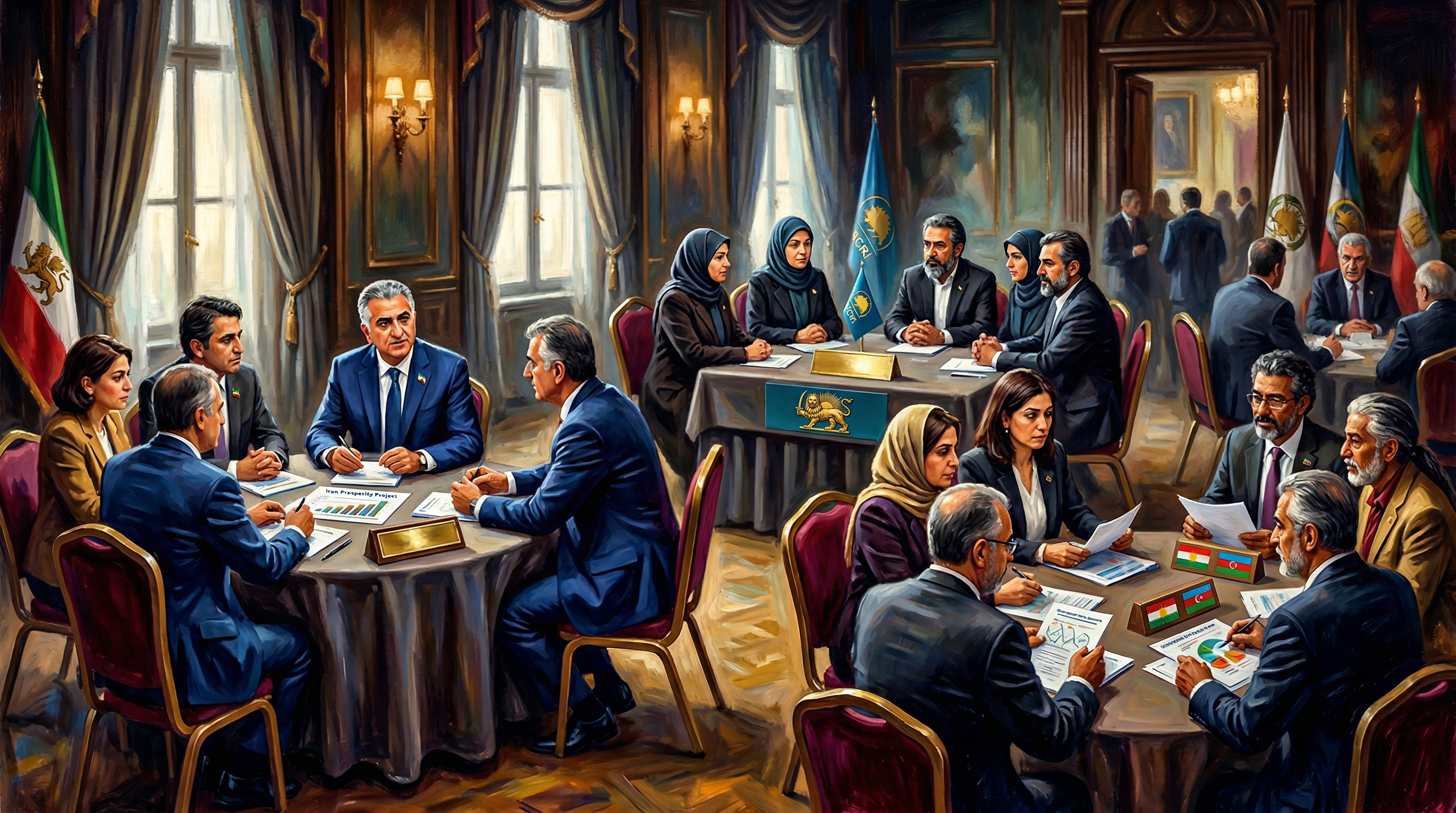
A new pluralist coalition, the Congress of Freedom Iran (کنگره آزادی ایران), held its founding session in London and announced its Coordinating Council on March 20–21, 2026. REPORTED(https://www.jebhemelli.info/hamleh-beh-iran-majlessie/)]
IranWire's live coverage on March 28 documented its ongoing deliberations, with republican activist Maryam Satvat stating: "We must manage our differences without trying to eliminate them." ATTRIBUTED
The congress includes an unusually broad coalition:
- Republican and secular-left figures (Reza Alijani, Mohammad Javad Akbarin)
- Ethnic and minority representatives (Baluch, Kurdish, and Azerbaijani figures)
- Cultural figures (filmmaker Mohsen Makhmalbaf)
- Pahlavi-aligned figures (Shahryar Ahy, Mehrdad Khansari)
- Women's rights representatives (Faribā Baluch)
[ASSESSED: The Congress of Freedom Iran appears to be the most genuinely pluralist of the three opposition formations, but is also the newest and operationally least developed. Its inclusion of both monarchist-adjacent and republican figures makes it a potential bridge structure—but also a potential fault line.]
 AI Generated
International Recognition and Diplomatic Status
No Western government has formally recognized Pahlavi or any opposition body as Iran's legitimate representative as of this date. Soft legitimization is occurring through institutional access:
- The European Parliament's Committee on Foreign Affairs placed Pahlavi on a provisional invitation list for an "exchange of views on the current situation" in Iran, alongside Shirin Ebadi and Kurdish, leftist, and other opposition leaders. REPORTED(https://www.euronews.com/my-europe/2026/03/03/european-parliament-considers-invitation-to-reza-pahlavi-amid-calls-for-regime-change-in-i)]
- Iranian Canadian organizations petitioned the House of Commons to recognize Pahlavi and the transitional team as legitimate representatives REPORTED(https://en.wikipedia.org/wiki/2026_Iranian_diaspora_protests)]
- An Australian petition with approximately 13,000 signatures called for revoking recognition of the Islamic Republic and endorsing Pahlavi's democratic transition REPORTED
Eurasia Group analyst Ian Bremmer assessed on March 7 that "there is no effective roadmap for replacing Iran's leadership — military wins don't equal political transition." ATTRIBUTED(https://www.youtube.com/watch?v=6UatXzsUS-A)]
[ASSESSED: The critical gap is the absence of formal diplomatic recognition. The Trump administration appears to tolerate—and may tacitly encourage—Pahlavi's political positioning, but has not crossed the threshold of formal state recognition. The CPAC invitation constitutes soft legitimization but falls short of official endorsement.]
Diaspora Mobilization at Historical Scale
The Iranian diaspora mobilization in 2026 is unprecedented in scope:
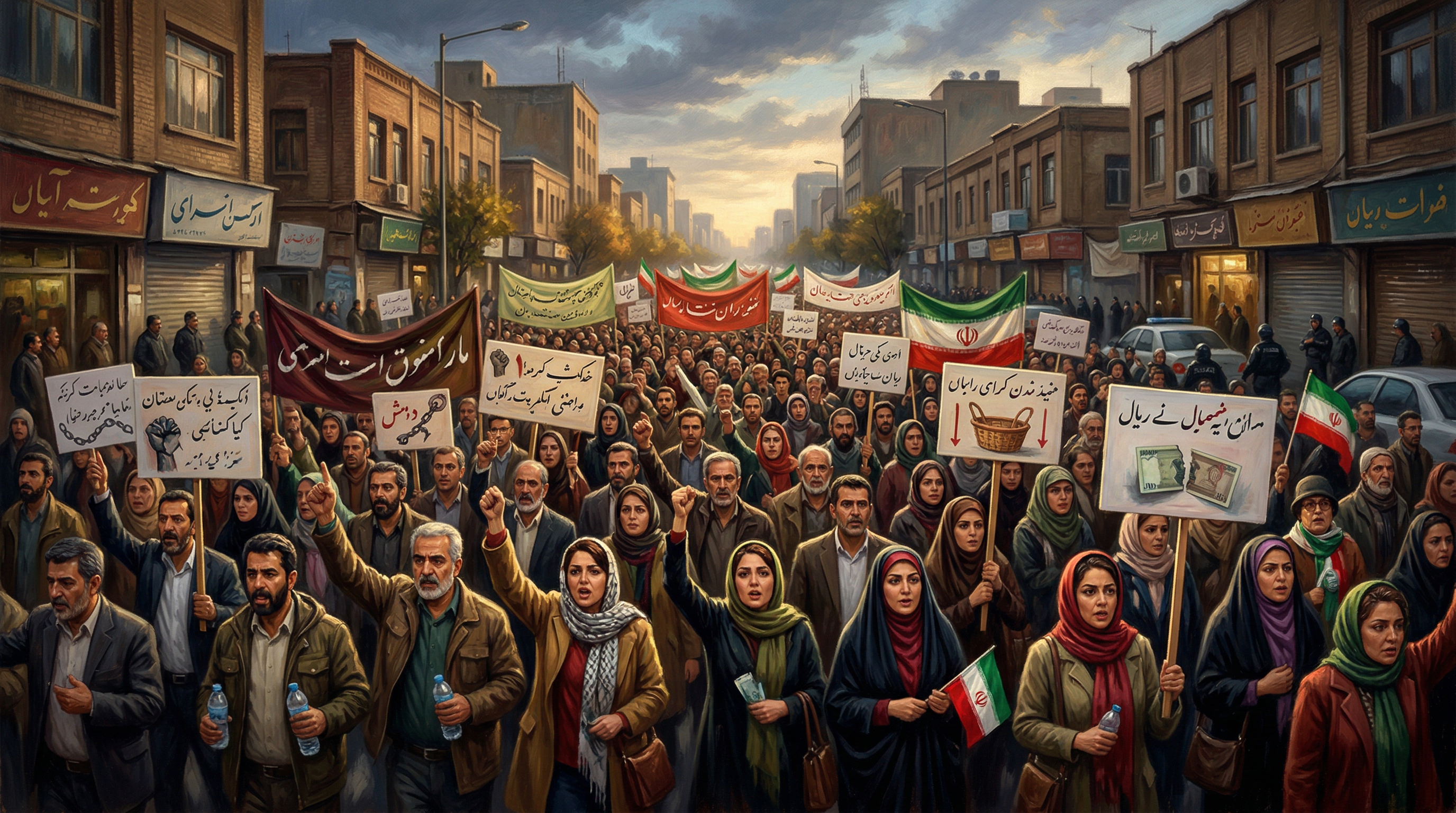
- February 14 Global Day of Action: Munich rally drew an estimated 250,000 participants (largest Iran-focused demonstration in European history); Toronto and Los Angeles each drew approximately 350,000. REPORTED(https://en.wikipedia.org/wiki/2026_Iranian_diaspora_protests)]
- CPAC March 26: Approximately 100 Iranians rallied outside the venue chanting "Thank you, Trump." REPORTED(https://www.yahoo.com/news/articles/hundreds-iranian-war-demonstrators-rallied-192623458.html)]
- Washington D.C. March 29: The National Mall rally is expected to be substantial, mobilizing diaspora across multiple ideological currents.
The coalition unites monarchists, secular republicans, some MEK supporters, and mainstream Iranian-American organizations—though documented tensions exist between these factions. REPORTED
Human rights activist Masih Alinejad has amplified internal Iranian suffering to Western audiences, including documentation of the regime's lowering of the minimum war participation age to 12 years old, forced confessions of protesters, and executions. ATTRIBUTED
Internal Iranian Unrest: Information Control and Defection Signals
The Regime's Information Crackdown
The regime is intensifying its security crackdown specifically against information flows and coordination:
- 84+ citizens arrested across multiple provinces for cooperating with foreign media and sharing sensitive information; Starlink devices have been seized. REPORTED
- 113 citizens arrested in Tehran and Kashan since the war's start, including Starlink users and VPN vendors. REPORTED
- A Sharif University master's student, Arman Hajmohammadi, was arrested in Yazd. REPORTED
- Café chain Lamiz had all Tehran branches shuttered after cups featured a 1975 painting by Iranian artist Farshid Mesghali that authorities deemed anti-Khamenei. REPORTED
[ASSESSED: The arrest of Starlink users and social media sharers indicates that the regime's most critical vulnerability is information leakage and population coordination capacity, not conventional military resistance. This reflects a regime that fears its own population's ability to document atrocities and coordinate dissent.]
Defection Claims and Reality
Pahlavi claimed in January 2026 that over 50,000 government and security force officials had registered on his coordination platform. ATTRIBUTED(https://www.britannica.com/event/2026-Iranian-Protests)] This figure is UNPROVEN—sourced solely from Pahlavi's own statements with no independent verification.
The IRGC's own internal security statement warned against "defiance, desertion, or disobedience"—a deleted section that exposed command-level anxiety. REPORTED(https://www.longwarjournal.org/archives/2026/03/iran-braces-for-internal-unrest-as-us-and-israeli-attacks-persist-march-14-16-updates.php)]
Anonymous Iranian officials told The Telegraph that